


- Filter
Jungle Berry
This coffee is for all you berry lovers out there. It's juicy, sweet and complex. The roast tends to be on the lighter side, highlighting juicyness and making this one of the most lively coffees on our lineup.
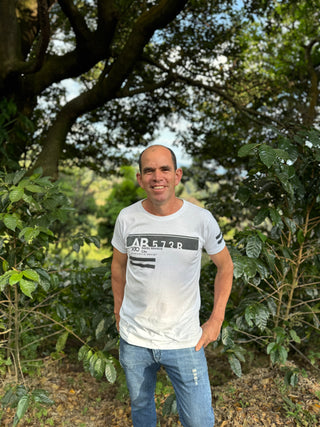
The coffee in Jungle Berry right now comes from a very decorated coffee producer in the West Valley of Costa Rica: Allan Oviedo. He keeps placing near the top of the Costa Rica Cup of Excellence and we’re so proud to work with him. He works hard, has great vision and cares about his coffee quality immensely. You can read about Allan below.
Adding product to your cart
KENYA THRIVING IN COSTA RICA, RIGHT?
I've been tasting and loving Allan's white and red honeys for years. But over the past three years I finally got my hands on his SL-28, and I fell for it hard. The first sip is immediately juicy, like green grape, and then it opens up into white chocolate macadamia nut, plum, gooseberry, blackberry and nutmeg. It isn't a fruit bomb. It's a really great balance of juicy fruit and warm spice, and if you want to know more about Allan, read on!
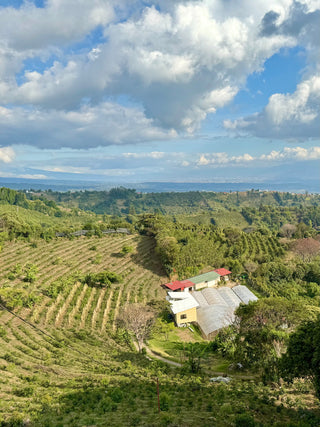
Allan Oviedo is a second-generation coffee producer. About 20 years ago he inherited his land from his father, Joel, but only half of it. Joel's farm was split in two, and the other half went to Allan's uncle.
For years Allan sold his cherries to the regional mill, which paid the market price no matter how good the coffee was. He kept improving the farm anyway, and in 2014 all that work turned into his own micromill. He named it Don Joel, after his dad.
It paid off. Allan qualified for the Costa Rica Cup of Excellence in 2018, and then again every single year since 2021. That's what a methodical, detail-obsessed producer looks like when the quality finally gets rewarded.
This lot is his SL-28. It's a variety that made its name in Kenya and has taken really well to Costa Rica, and it's a refreshing change from the Caturra and Catuaí that most of the country grows.
Honeys are a big part of what Allan does. In a honey process, some of the mucilage stays on the bean after de-pulping and through drying. I am over simplifying here, but essentially the more that's left on, the darker the honey: white, yellow, red, then black. Done right, a honey picks up a lot of sweetness and flavour and still tastes clean. That's much easier said than done, and it's where raised beds earn their keep: air moves around the coffee on every side, so it dries evenly and results in a clean honey.
And the best part of Allan's story? With everything he's earned, he bought the other half of his father's land back from his uncle. Joel's farm is whole again, and Allan has been planting it with Villa Sarchi, Typica and more SL-28.
– Sebastian

PAIRS WELL WITH
Good coffee
Very good
Complex flavour to be savoured in the morning for me.
I love coffee from East Africa and this one didn't disappoint. Actually it's the best, the coffee itself and also the roasting, no "dark", i.e.burnt nonsense. Thanks, P&S, for keeping standards
This review is based upon the Oviedo family grown Don Joel honey processed and not the current Evin Moreno, which is a double-fermented washed process. I will cup and review the latter sometime in the near future.
Notably sweet, Demera sugar comes to mind, real Demerara not Rogers. This becomes very apparent as the coffee cools. It is brightly acidic, citrusy in character. The flavour profile is masked until it cools a bit and, at least for me, takes on a caramelized berry experience on the palate. The finish is long and sweet.
Some may criticize my method, but I don't care. My water to bean ratio is 10 to 1 in a French press, with a slightly coarser than recommended grind. Water off boiling for 2 minutes, no bloom, and a brew of 4 minutes with no stir before plunging. It produces what I see as a near flawless velvety smooth cup.
It is exactly what I would expect of an SL28, honey processed, and grown in Central America.
To clarify, I am a member of the Specialty Coffee Association but am not connected to Phil & Sebastian and my review is unbiased.